
SignSealer — Digital Agreements You Can Prove
Client: SignSealer (Founder)
Electronic signatures, waivers and tamper-evident records built on an evidence model that treats the signature as the least interesting row in the store — with a v1 API, a retrying SDK, and executed agreements sealed as PAdES-T PDFs any reader can verify.
Context & Objective
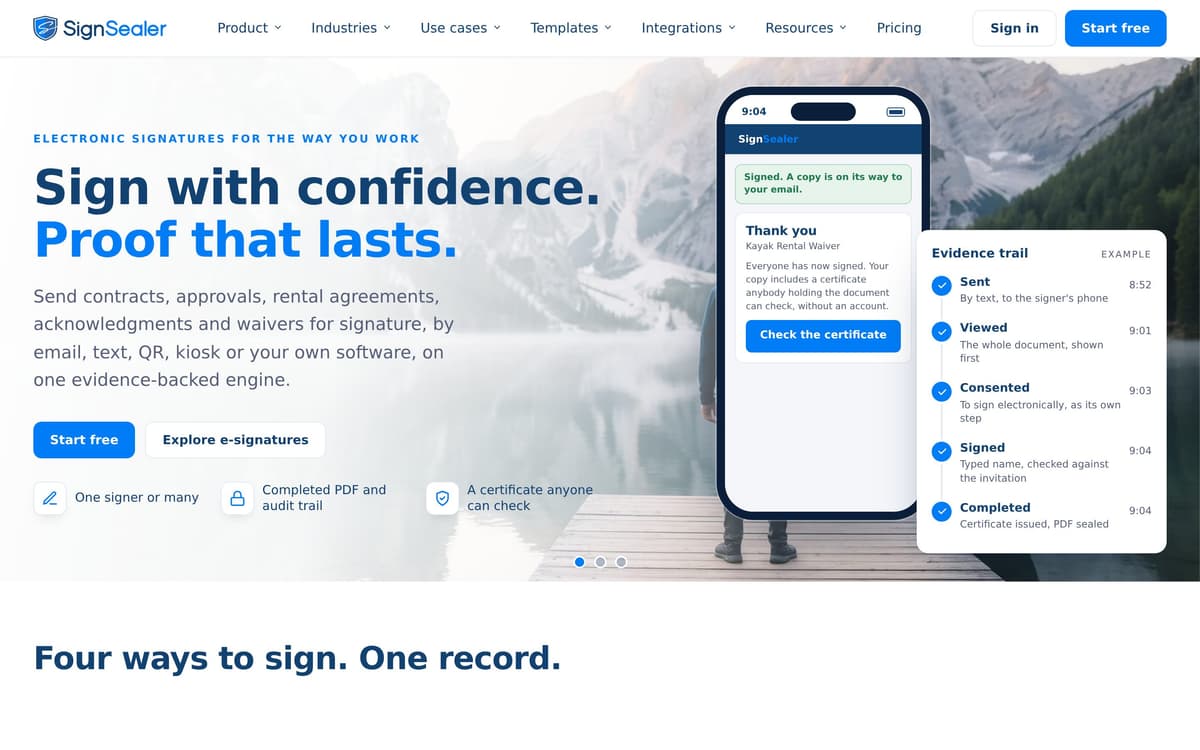
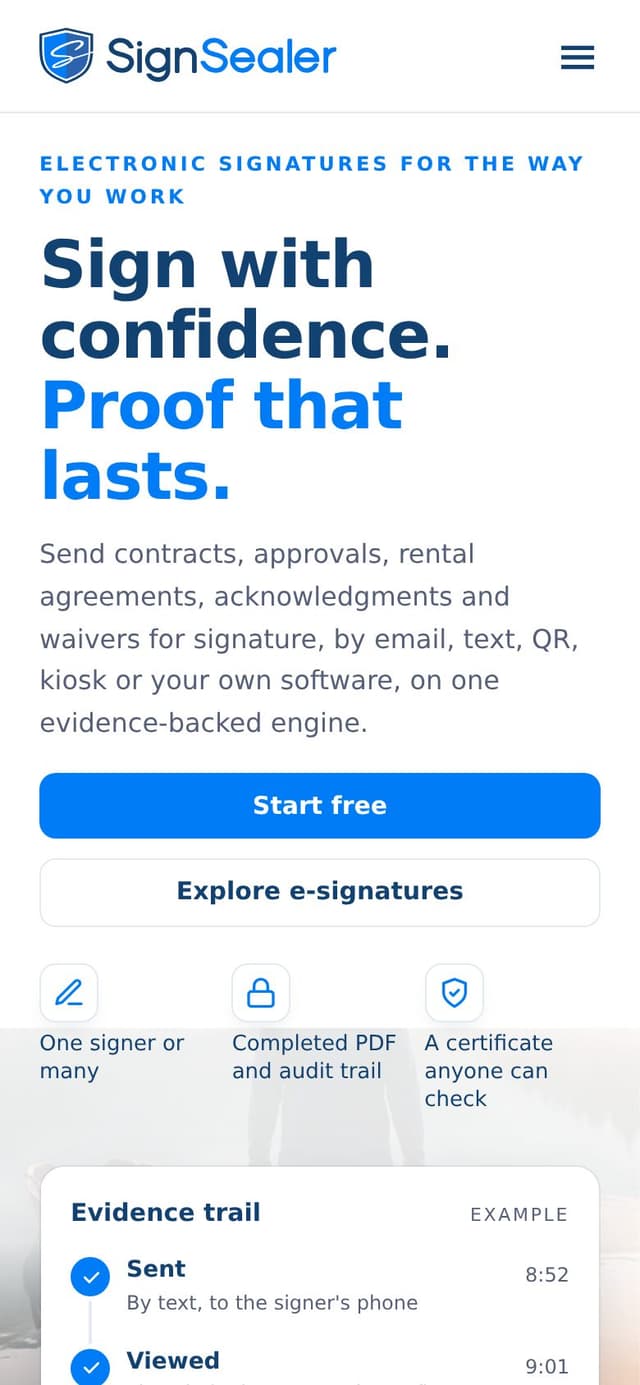
E-signature tools prove that somebody clicked. Businesses that run on waivers and agreements — rentals, recreation, hospitality — need to prove what was agreed, by whom, and that it has not changed since, to somebody who does not have access to their system.
Outcome
A signing engine whose rules live in Postgres rather than in application code, asserted by 280+ assertions across nine SQL suites plus end-to-end API and PDF suites run against a database rebuilt from migrations. One engine serves three consumers: the SaaS, DeckPOS waivers, and the Mashdun signing module.
Key Highlights
- PAdES-T sealed PDFs — agreement and certificate in one file, timestamped over the signature so the authority never sees the contract
- Tamper provable two ways: to anyone who can query the database, and to a stranger's PDF reader with no access at all
- Reservations as a first-class primitive — subject facts drive requirement rules, and a packet emits a ready event when the last required signature lands
- Minority judged on the arrival date, never the signing date; a blank date of birth is refused rather than read as an adult
- Idempotent by construction — a replayed key returns the stored response, a reused key with a different body is refused
- Messaging that honors suppression and quiet hours in the guest's own timezone, with the transactional carve-out named on the row so it can be audited
- Operator access as an expiring membership: every look leaves a row, and no operator can read what a customer's counterparties signed
- Billing on one unit — a completed agreement — keyed to the event that caused it, so a charge can always be shown its own evidence