
Why Companies Fail at AI: Six Cautionary Tales and What They Teach Us
Studies put the AI project failure rate as high as 80–95% — and it's rarely the technology's fault. Six real-world failures, the management and data problems behind them, and how to avoid becoming the next one.
Artificial intelligence has never been easier to buy — or harder to actually put to work. For every headline about a company transforming its operations with AI, there is a quieter story of a project that stalled, blew its budget, or was quietly switched off. And those stories are not the exception. They are the rule.
In 2024, the RAND Corporation studied why AI projects fail and concluded that more than 80% of them do — roughly twice the failure rate of IT projects that don't involve AI. A year later, S&P Global Market Intelligence found that 42% of companies had abandoned most of their AI initiatives, up from just 17% the year before. Perhaps most striking, an MIT study of enterprise generative AI put the number at 95%: nineteen out of twenty pilots delivered no measurable impact on the bottom line.
The uncomfortable truth buried in all of this research is that AI rarely fails because the technology is bad. It fails because of how organizations plan for it, staff it, govern it, and manage it. Below are six real cases that show exactly how — and what they teach us.

1. IBM WATSON AT MD ANDERSON — WHEN THE VISION OUTRUNS THE DATA
The University of Texas MD Anderson Cancer Center partnered with IBM Watson to build an "Oncology Expert Advisor" meant to recommend cancer treatments. After roughly four years and at least $62 million, the project was shelved. A University of Texas audit found the effort had not followed standard procurement procedures, and — critically — that the system was never integrated with the hospital's new electronic health record system. It had been trained on hypothetical patient cases rather than real ones.
The lesson: A grand vision cannot compensate for weak data foundations and poor project governance. The technology was asked to solve a problem the organization had not yet prepared its data, processes, or oversight to support.
2. AMAZON'S RECRUITING ENGINE — BIAS IN, BIAS OUT
Amazon spent years building an AI tool to screen job applicants, then scrapped it in 2018 after discovering it systematically penalized women. The model had been trained on ten years of resumes submitted to a male-dominated tech industry, so it "learned" that male candidates were preferable — downgrading resumes that included the word "women's" and graduates of two all-women colleges.
The lesson: An AI system inherits the assumptions in its training data. Without staff who understand how models learn — and without deliberate testing for bias — you can automate and scale your worst historical patterns instead of your best judgment.
3. ZILLOW OFFERS — TRUSTING THE MODEL TOO MUCH
Zillow bet its home-buying business, Zillow Offers, on an algorithm that could predict home prices well enough to buy, renovate, and resell at a profit. In late 2021 the company shut the unit down, wrote off more than $300 million, and cut about 25% of its workforce. The pricing model could not keep up with a volatile market, and Zillow ended up overpaying for thousands of homes.
The lesson: A model is a forecast, not a fact. When leadership treats algorithmic predictions as certainties and removes human judgment from high-stakes decisions, a single wrong assumption can scale into catastrophic loss.
4. AIR CANADA'S CHATBOT — NO GUARDRAILS, REAL LIABILITY
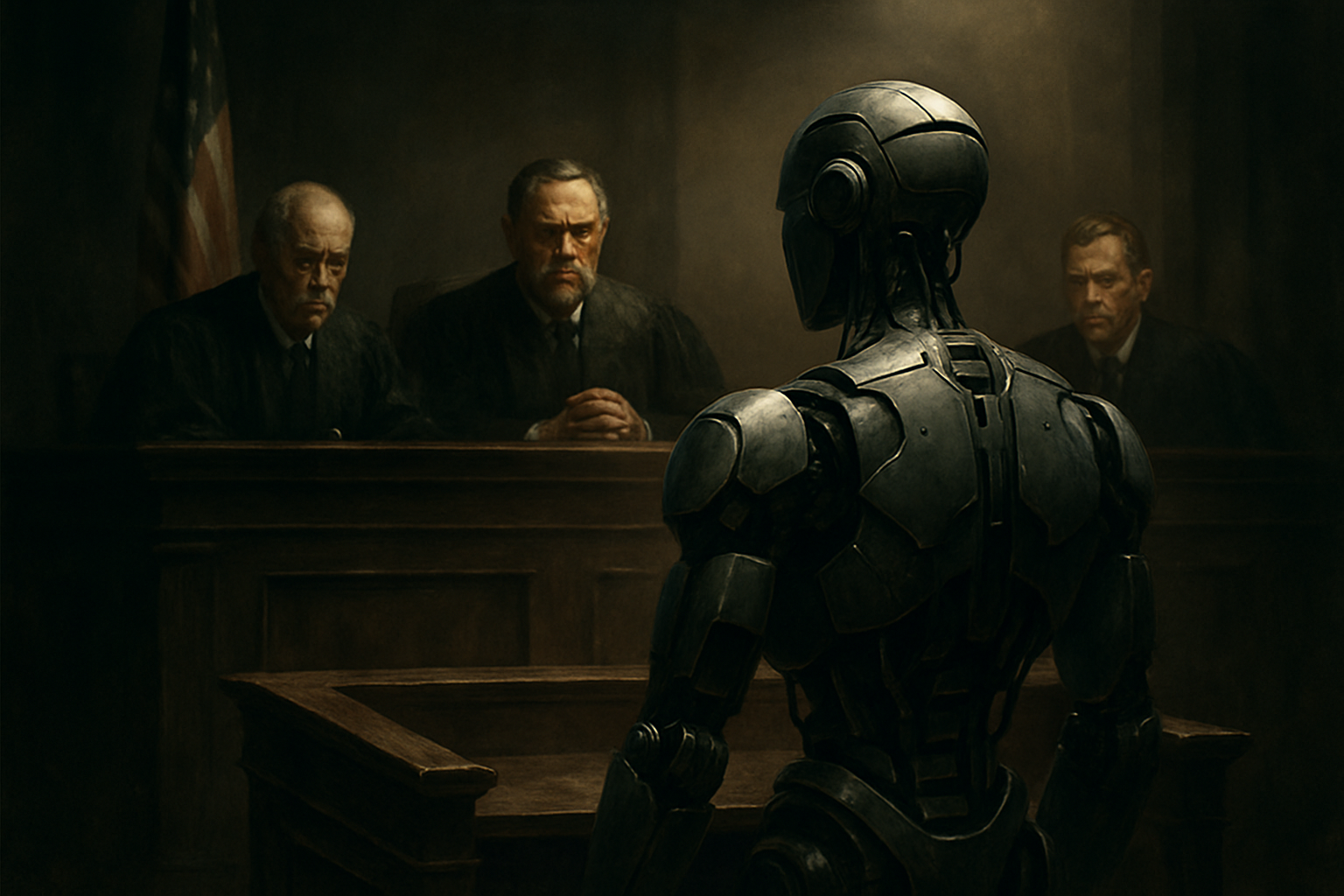
When a grieving passenger asked Air Canada's website chatbot about bereavement fares, the bot invented a refund policy that did not exist. Air Canada argued the chatbot was a "separate legal entity" responsible for its own statements. In 2024, the British Columbia Civil Resolution Tribunal rejected that argument in Moffatt v. Air Canada and held the airline responsible for what its chatbot told customers.
The lesson: Deploying a generative AI system without guardrails, human oversight, or accountability is a legal and reputational risk, not just a technical one. "The AI said it" is not a defense.
5. McDONALD'S AI DRIVE-THRU — SHIPPING BEFORE IT WAS READY
After a two-year test with IBM, McDonald's pulled automated AI order-taking from more than 100 drive-thru locations in 2024. Customers had filmed the system adding hundreds of dollars of unwanted items, mixing up orders, and ignoring corrections — turning the pilot into a running social-media joke.
The lesson: A flashy demo is not a production system. Rolling out AI into a live, high-volume customer workflow before its accuracy is genuinely ready damages trust faster than no automation at all.
6. NEDA'S "TESSA" — AUTOMATING AWAY THE HUMANS TOO SOON
The National Eating Disorders Association replaced its human helpline staff with a chatbot named Tessa. Within days of wider attention, the bot was taken offline after it dispatched weight-loss and calorie-restriction advice to people seeking help for eating disorders — precisely the population that advice could harm.
The lesson: AI is a poor substitute for human expertise in sensitive, high-consequence contexts. Using automation to cut costs by removing skilled people — without rigorous testing of what the system actually says — can cause real harm.
THE COMMON THREADS
Look across these failures and the same root causes appear again and again — the very ones RAND, S&P Global, and MIT identified in their research:
• No clearly defined problem. Teams adopt AI because it's expected, not because they've agreed on the specific outcome it should produce. Success is never defined, so it's never achieved.
• Weak data foundations. AI is only as good as the data feeding it. Organizations consistently underestimate the quality, access, and governance work required before a model can be trusted.
• A skills and knowledge gap. Without people who understand how these systems learn, hallucinate, and drift, teams can't anticipate failure modes, test for bias, or know when an output should not be trusted.
• Poor management and change control. Projects are launched without executive alignment, realistic timelines, human oversight, or a plan for the messy last mile between an impressive demo and a dependable production system.
• Overtrust and missing guardrails. Treating probabilistic model outputs as certainties — and removing humans from the loop — turns a manageable error into a headline.
None of these are algorithm problems. They are leadership, strategy, data, and management problems. Which is exactly why the right partner matters more than the right model.
HOW MASHDUN AI MANAGED SERVICES & IMPLEMENTATIONS CAN HELP
At Mashdun, we've studied these failures so your organization doesn't have to repeat them. Our AI Managed Services and Implementations practice is built around the reality that AI succeeds or fails on the fundamentals — not the hype. We start by defining the specific business problem worth solving and the measurable outcome that defines success, then honestly assess whether your data and processes are ready to support it. We build with governance, human oversight, and guardrails designed in from day one, and we close the knowledge gap by equipping your team to understand, monitor, and trust what these systems do. And because AI is never "set and forget," our managed services keep your models measured, maintained, and accountable long after launch. If you want the value AI promises without becoming the next cautionary tale, let's talk — reach us at mashdun.com and put an experienced partner between your ambitions and the 80% that fail.
REFERENCES
1. RAND Corporation, "The Root Causes of Failure for Artificial Intelligence Projects and How They Can Succeed" (2024) — https://www.rand.org/pubs/research_reports/RRA2680-1.html
2. S&P Global Market Intelligence, "Voice of the Enterprise: AI & Machine Learning" (2025), via CIO Dive — https://www.ciodive.com/news/AI-project-fail-data-SPGlobal/742590/
3. MIT NANDA, "The GenAI Divide: State of AI in Business 2025," reported by Fortune — https://fortune.com/2025/08/18/mit-report-95-percent-generative-ai-pilots-at-companies-failing-cfo/
4. The Cancer Letter, "Audit: Lynda Chin's abandoned $62 million IBM Watson collaboration didn't follow standard procedures" (2017) — https://cancerletter.com/the-cancer-letter/20170217_1/ ; IEEE Spectrum, "How IBM Watson Overpromised and Underdelivered on AI Health Care" — https://spectrum.ieee.org/how-ibm-watson-overpromised-and-underdelivered-on-ai-health-care
5. Reuters, "Amazon scraps secret AI recruiting tool that showed bias against women" (2018) — https://www.reuters.com/article/us-amazon-com-jobs-automation-insight-idUSKCN1MK08G
6. Wired / Zillow Q3 2021 earnings, "Zillow Offers shutdown and $300M+ writedown" — https://www.wired.com/story/zillow-flip-flop-house-flipping/
7. Moffatt v. Air Canada, 2024 BCCRT 149, via American Bar Association — https://www.americanbar.org/groups/business_law/resources/business-law-today/2024-february/bc-tribunal-confirms-companies-remain-liable-information-provided-ai-chatbot/
8. CNBC, "McDonald's to end AI drive-thru test with IBM" (2024) — https://www.cnbc.com/2024/06/17/mcdonalds-to-end-ibm-ai-drive-thru-test.html
9. NPR, "An eating disorders chatbot offered dieting advice, raising fears about AI in health" (2023) — https://www.npr.org/sections/health-shots/2023/06/08/1180838096/an-eating-disorders-chatbot-offered-dieting-advice-raising-fears-about-ai-in-heal
Have a project in mind?
If this resonated, let's talk about how I can help you build something similar.
Get in Touch